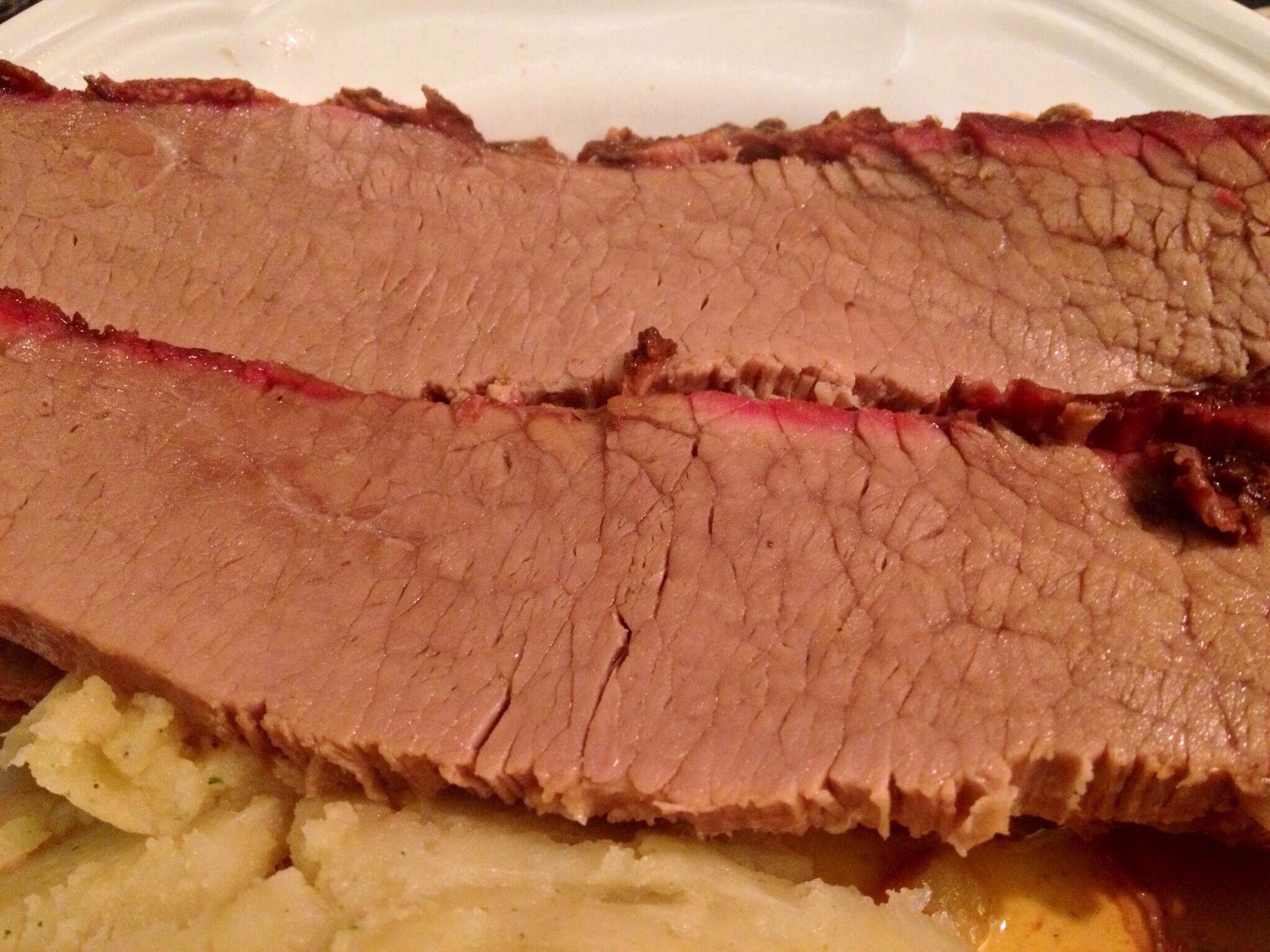
Ro*Tel sausage dip

This easy-to-make, satisfying recipe is one of my favorite party foods. It’s delicious, doesn’t mess up your whole kitchen, and requires no real planning ahead. It comes together as quickly as a box of brownies, and it’s far less likely to be duplicated by other party patrons. It’s also hearty enough to act as a makeshift dinner, should you find yourself starving to death amidst a forest of pretzels, chocolate-dipped strawberries, and inexpensive cheese cubes.

Skip to the short version

I was first introduced to this recipe some years ago by my wife. At the time I had assumed that, like her, Ro*Tel sausage dip heralded from Texas. Upon further research, however, I discovered that nobody really knows where the hell it comes from. I know where it’s going though, and that’s in my belly.
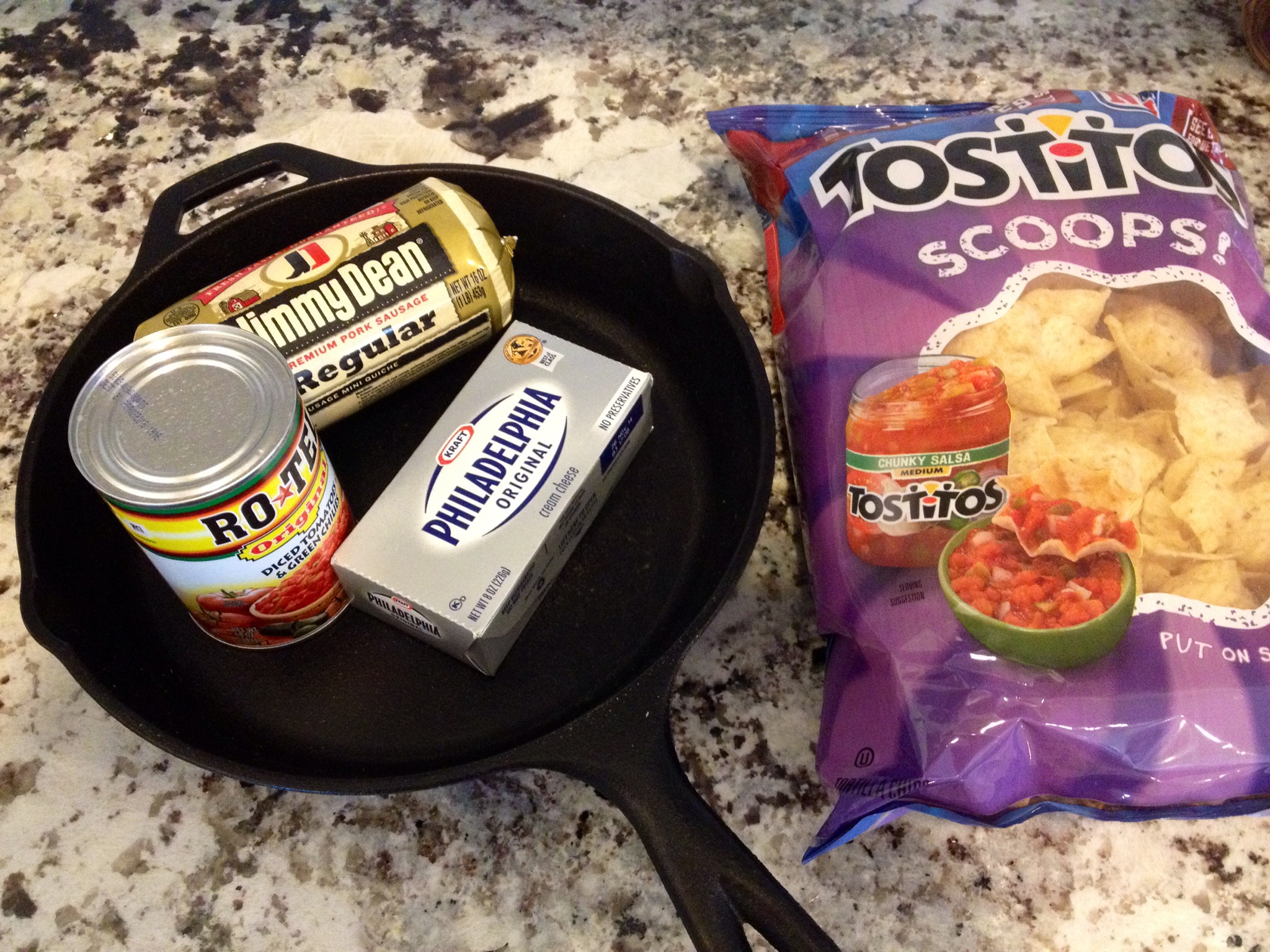
This picture makes my blog look like a Penny Saver ad.

This picture makes my blog look like a Penny Saver ad.


Ingredients

Your first task is to collect the items you see before you. I strongly recommend against substituting anything, as the strength of this recipe lies in the synergy of its simple ingredients. To goof around with any of the three main components is to invite disappointment. If you have a hard time locating the Ro*Tel, look wherever your grocery store stocks canned tomatoes.

  • 1 lb Jimmy Dean bulk pork sausage
  • 1 can Ro*Tel (10 oz)
  • 1 brick (8 oz) Philadelphia Cream Cheese
  • 1 bag Tostitos Scoops


Directions

Preheat your oven to 350 degrees F. Before you do anything else, take the cream cheese out of the fridge and set it on the counter to soften – this will make it easier to work with later. On medium-high heat, brown the sausage in a large frying pan. Or, if you have a cast iron skillet, use that instead. Not only does it do a better job of crisping up the sausage, but it can go straight into the oven as well.
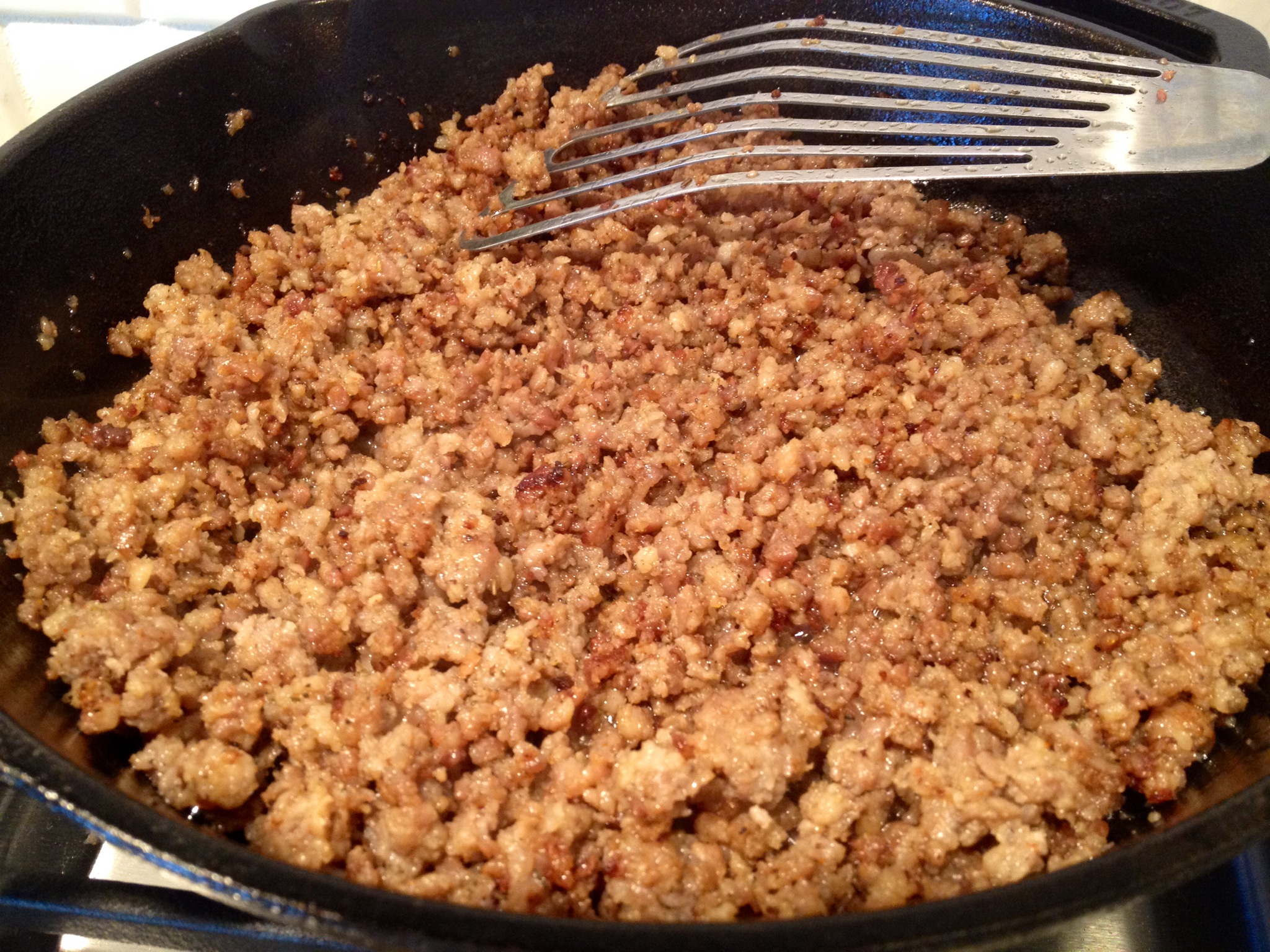
Brown that little piggy. Brown him good.

Brown that little piggy. Brown him good.

Break up the larger chunks of sausage as it cooks, making sure it’s done all the way through. If the grease freaks you out, drain it off.

Reduce heat to medium and add the cream cheese and can of Ro*Tel. There’s no need to drain the Ro*Tel, just dump it in there juice and all.
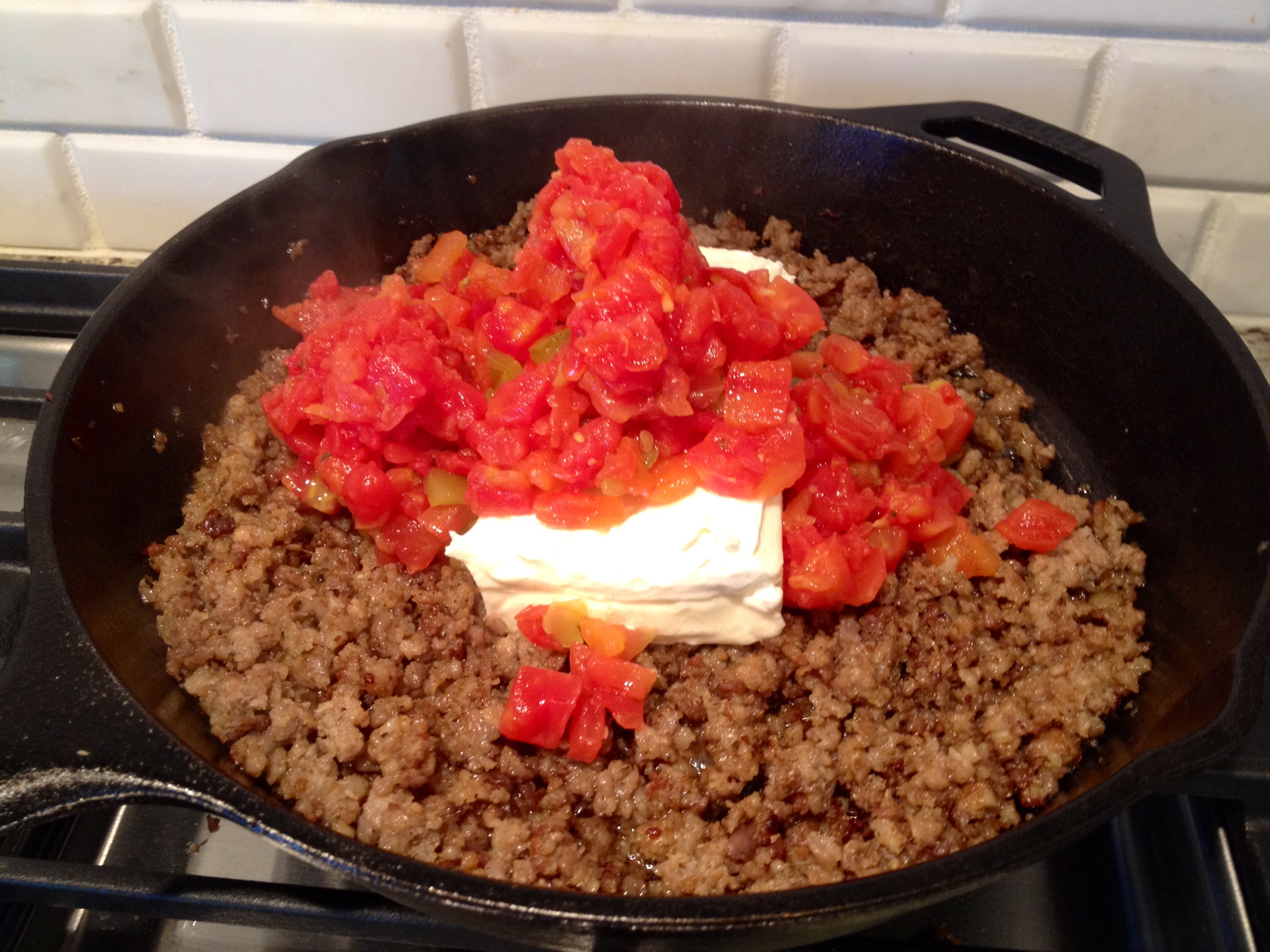
Everyone in the pool!

Everyone in the pool!

Stir carefully until the cream cheese has completely melted and the mixture is evenly blended, then turn off the heat and transfer the whole mess to a casserole dish of some kind. A Pyrex baking dish is a good choice; any size will do as long as it can hold all of the sausage mixture without overflowing.

Bake uncovered for 10 or 15 minutes, until your newly created sausage dip is bubbly and awesome. Break out the Scoops and dig in, but remember not to burn away all the flesh from the roof of your mouth. If you’re going to take this to a shindig at someone else’s house, cover it securely with aluminum foil, wrap it in an old (but clean!) bath towel, and lay it flat in the trunk of your car. It will stay hot for a couple hours this way – no reheating necessary.

Enjoy!
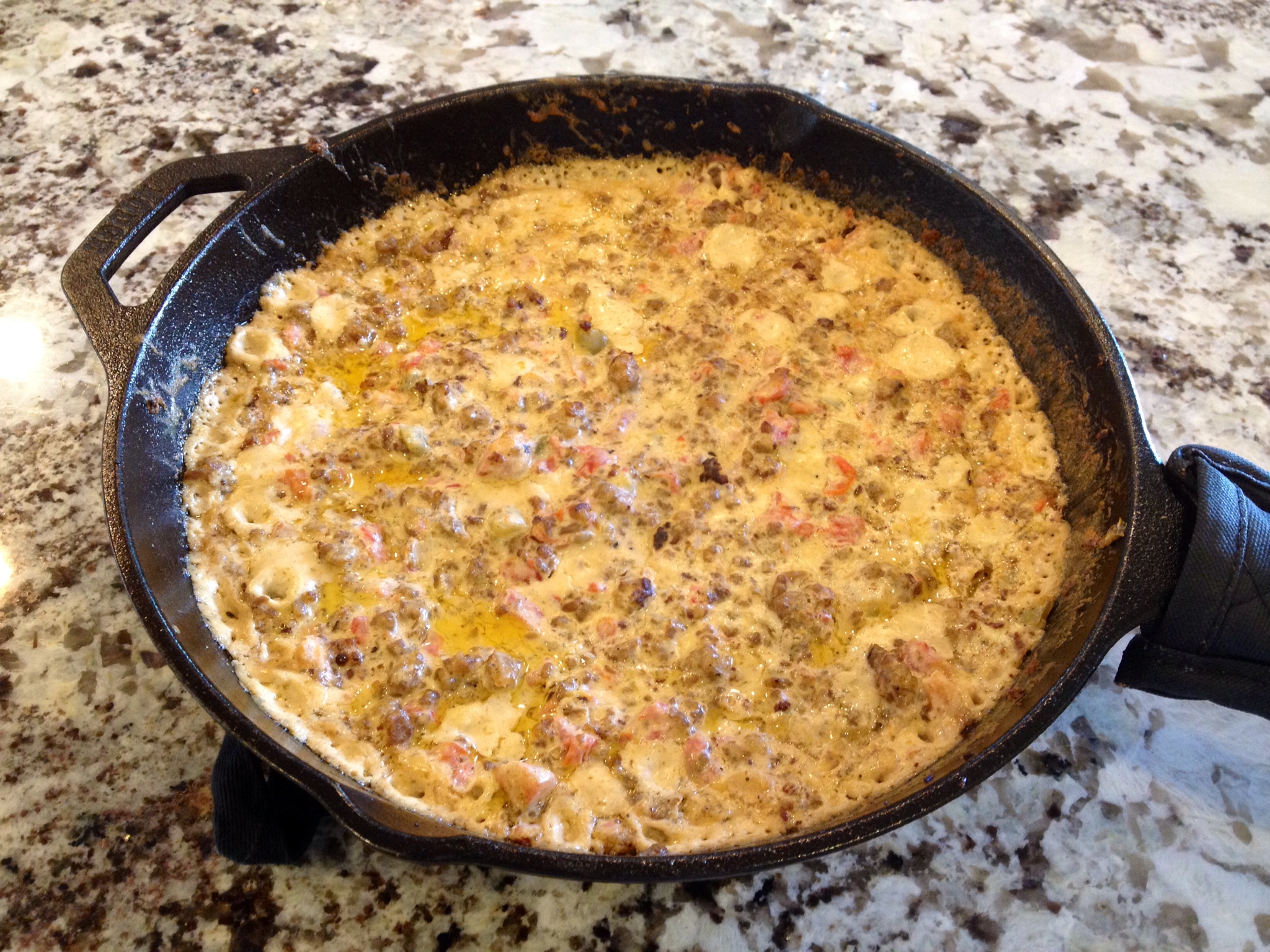
Warning: It's 3,697 degrees hotter than you think it is. Consume slowly.

Warning: It’s 3,697 degrees hotter than you think it is. Consume slowly.


tl;dr

Ro*Tel sausage dip

Ingredients

  • 1 lb Jimmy Dean bulk pork sausage
  • 1 can Ro*Tel (10 oz)
  • 1 brick (8 oz) Philadelphia Cream Cheese
  • 1 bag Tostitos Scoops


Directions

Preheat oven to 350 degrees F. Brown sausage, add undrained can of Ro*Tel and cream cheese. Stir until cream ceese is evenly mixed in. Transfer to baking dish, bake for 15 minutes or until bubbly. Serve hot with Scoops.


See also


Standard Recipe Disclaimer
I don’t come up with a lot of my own recipes (unless you count my own personal milk-to-Grape-Nuts ratio), and chances are the recipe posted above belongs to or was inspired by a person other than me. So if you’re wondering whether or not I ripped somebody off, I probably did. Don’t get out the pitchforks and torches just yet though! I want to make absolutely sure I give credit where it’s due, so if you think someone deserves recognition for something that I haven’t already called out FOR CRYING OUT LOUD LET ME KNOW. Thanks, I appreciate it. Here’s a cookie.


Teeny little cinnamon rolls

This tasty dessert (or breakfast?) is so quick and easy, it can barely be considered a recipe. Because I didn’t think of it myself, I’ll assume you didn’t either. And here we are. There are a multitude of very slightly different versions of this exact recipe everywhere; this is the version I prefer.

Skip to the short version

” Swearing helps during this step “

One of the other nice things about this recipe is that it can be made normally – in other words, unhealthy – or in a reduced guilt version. Just substitute reduced fat croissant rolls for the regular ones and omit the butter, and just like that you’ve got yourself a low(er) calorie treat that’s equivalent to about one Weight Watcher’s point each.


Ingredients

  • 1 8oz container of crescent rolls
  • 2 tbsp butter, melted
  • 4 tsp granulated sugar
  • 1 tsp ground cinnamon
  • 1/2 cup powdered sugar
  • 2 tsp milk
  • a double-wide trailer with an oven
Normal people don't assemble their ingredients ahead of time. Only bloggers are this weird.

Normal people don’t assemble their ingredients ahead of time. Only bloggers are this weird.


Directions

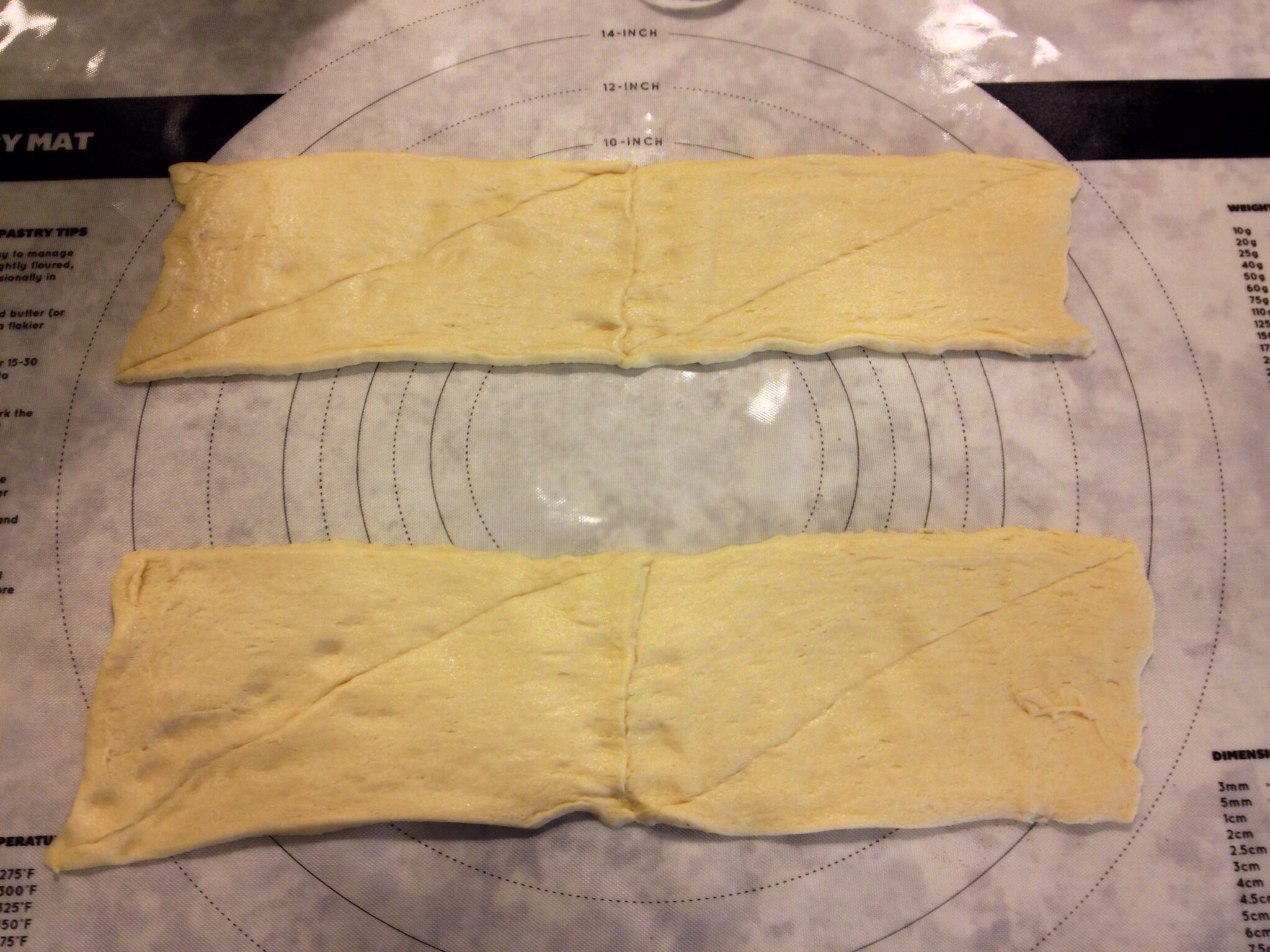
Preheat your oven to 375 degrees F. Sorry about the double-wide remark in the ingredients list… It was out of line. You can bake these cinnamon rolls in a single-wide just as easily. Anyway, open the tube-o-crescent-rolls, unroll the dough, and separate it into two sections as shown below. Using your fingers, seal the perforated seams so that you are left with two solid sheets.

The contents of a pressurized dough tube, known on the street as a 'trailer park stun grenade'.

The contents of a pressurized dough tube, known on the street as a ‘trailer park stun grenade’.

Mix together the cinnamon and granulated sugar in a small bowl. Brush the first section of dough with half the butter and sprinkle on half the cinnamon sugar mixture; repeat with the second section of dough, using the other half of the butter and cinnamon sugar. Roll up the sections of dough starting with the long sides, keeping the roll as tight and even as you can. Don’t feel bad if you screw one of them up, because there’s an above average chance you will. I did.

Seal the trailing edge of the dough against the rest of the roll by pinching it into place with your fingers. Cut each roll of dough into 10 sections, making 20 miniature little rolls. Place the miniature rolls on a cookie sheet, standing them on their ends. You may need to smash them down a bit to get them to stay upright. Swearing helps during this step.

Each one of these rolls would be a feast for a leprechaun.

Each one of these rolls would be a feast for a leprechaun.

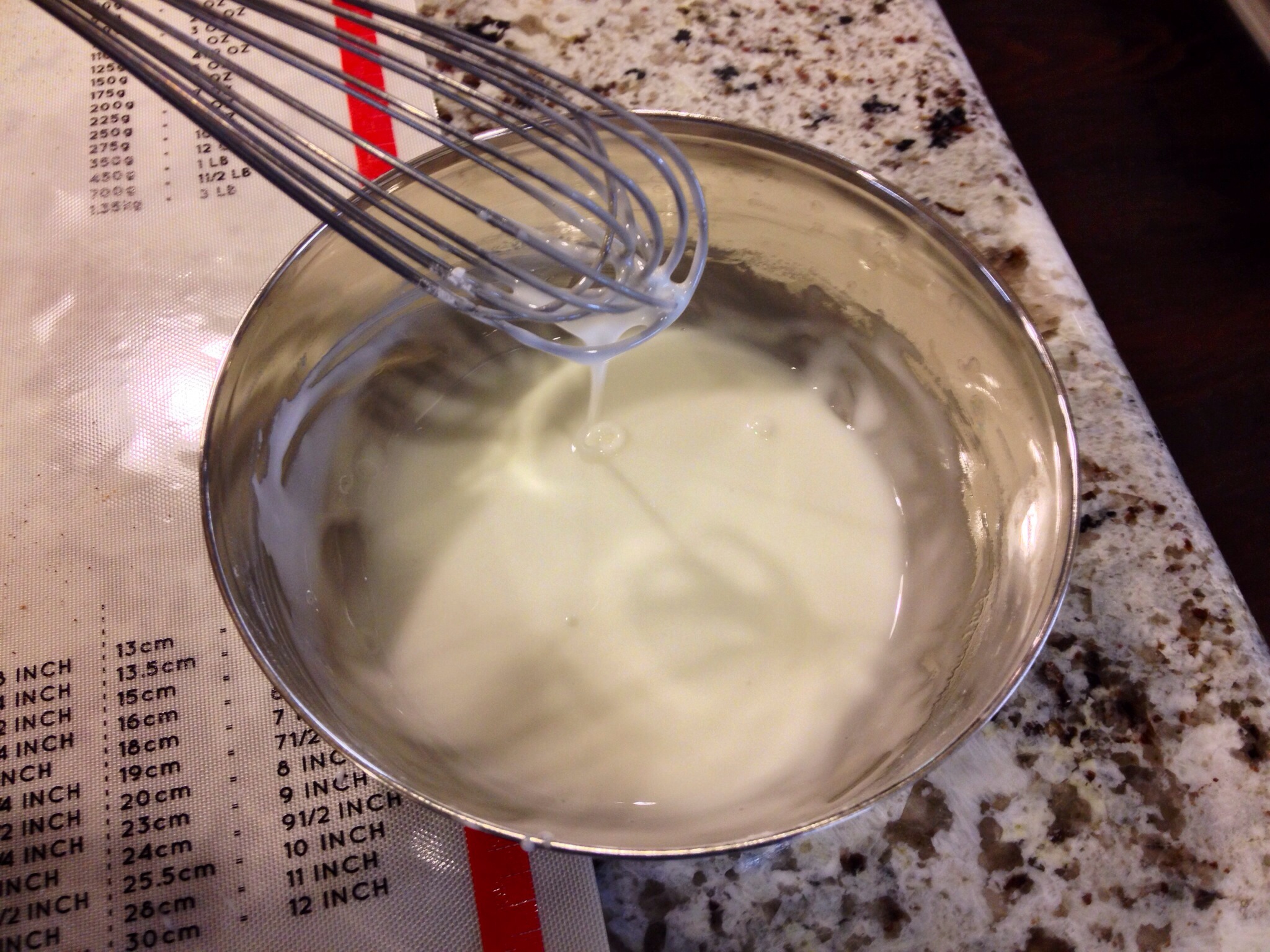
Place the rolls in the oven and bake for 10-12 minutes. While we wait for the oven to do its thing, let’s mix up the icing. In another small bowl, slowly add the milk to the powdered sugar a little bit at a time, whisking constantly. Stop adding milk when it looks like it’s supposed to. And what’s that, you ask? Oh come on, you MUST have had a cinnamon roll at some point in your life. Remember what the icing was like? Well, make it look like that.

Mmm, frosting. Or is it icing? I can never keep them straight.

Mmm, icing. Or is it frosting? I can never keep them straight.

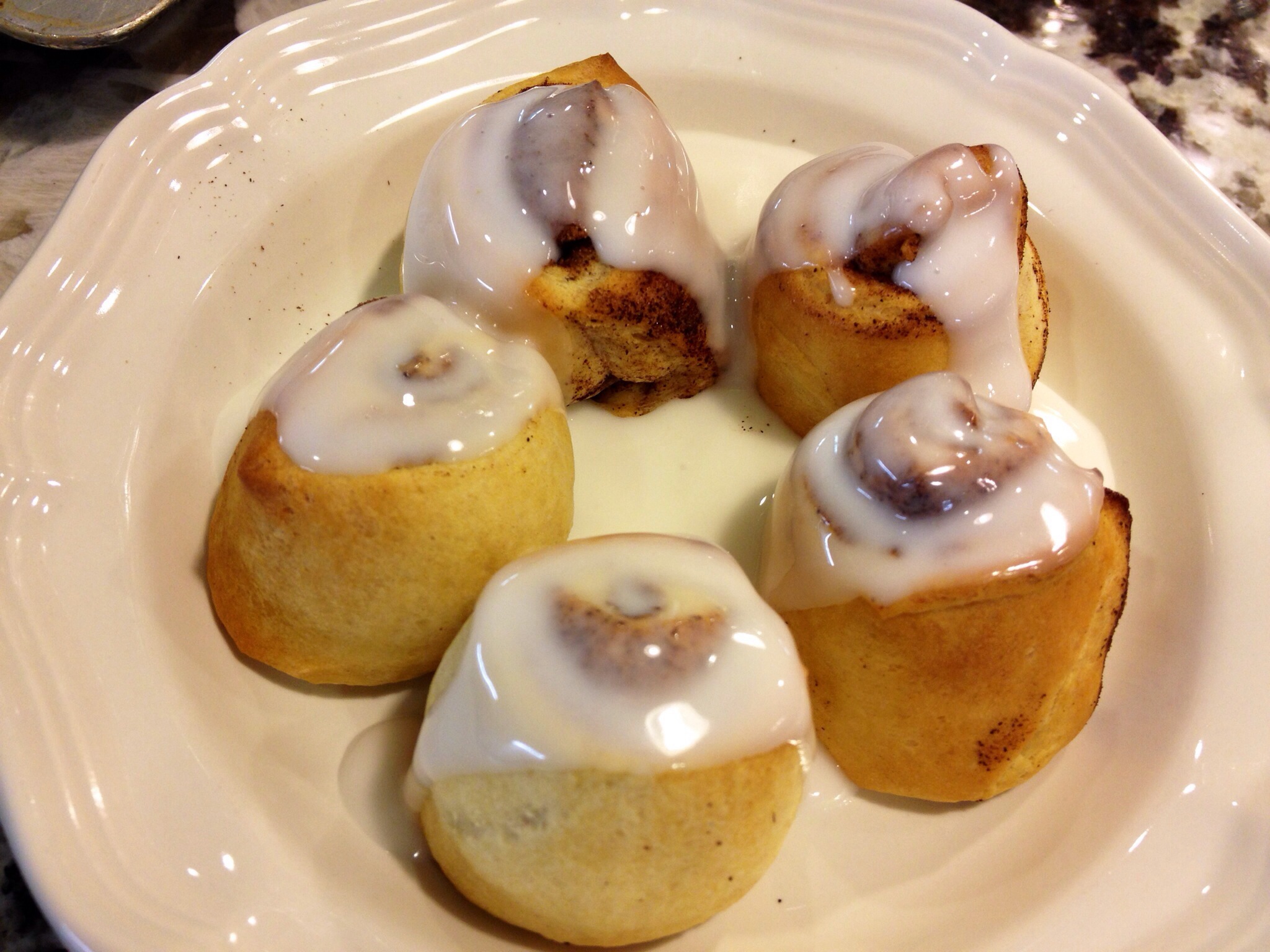
Remove the rolls from the oven, place them piping hot on a plate, drizzle some icing on them, and… I’ll let you figure out the rest.


3.. 2.. 1.. Gorge!

3.. 2.. 1.. Gorge!


tl;dr

Teeny little cinnamon rolls

Ingredients

  • 1 8oz container of crescent rolls
  • 2 tbsp butter, melted
  • 4 tsp granulated sugar
  • 1 tsp ground cinnamon
  • 1/2 cup powdered sugar
  • 2 tsp milk


Directions

Preheat oven to 375 degrees F. Mix together milk and powdered sugar to make frosting, set aside. Unroll crescent rolls and arrange into two rectangular sections, sealing diagonal seams in both. Brush with butter, sprinkle with cinnamon and sugar, and roll up. Cut each roll into 10 sections. Lay flat on a baking sheet and bake for 10-12 minutes, top with frosting.


See also


Standard Recipe Disclaimer
I don’t come up with a lot of my own recipes (unless you count my own personal milk-to-Grape-Nuts ratio), and chances are the recipe posted above belongs to or was inspired by a person other than me. So if you’re wondering whether or not I ripped somebody off, I probably did. Don’t get out the pitchforks and torches just yet though! I want to make absolutely sure I give credit where it’s due, so if you think someone deserves recognition for something that I haven’t already called out FOR CRYING OUT LOUD LET ME KNOW. Thanks, I appreciate it. Here’s a cookie.


Beer can chicken

There is something deliciously hilarious about this recipe that appeals to all men. Beer combined with bored hillbillies is guaranteed to result in either disaster or hilarity. In this particular case, depending on whether or not you are the proctologically doomed chicken in question, it’s a little bit of both.

Skip to the short version

” I have no intention of finding out what Schlitz logo ink tastes like “

In a stroke of blind luck (or pure genius), it turns out that this is one of the easiest ways you can imagine to cook up a juicy, tender, and flavorful bird. The basic idea is that you’re steaming the chicken from the inside while roasting it on the outside, and there a number of different ways to accomplish this. In addition to using beer as the “steaming medium”, you can also use wine, cola, broth, lemonade… the list is endless. I’ll detail my own favorite recipe below, but don’t be afraid to experiment with different flavors.

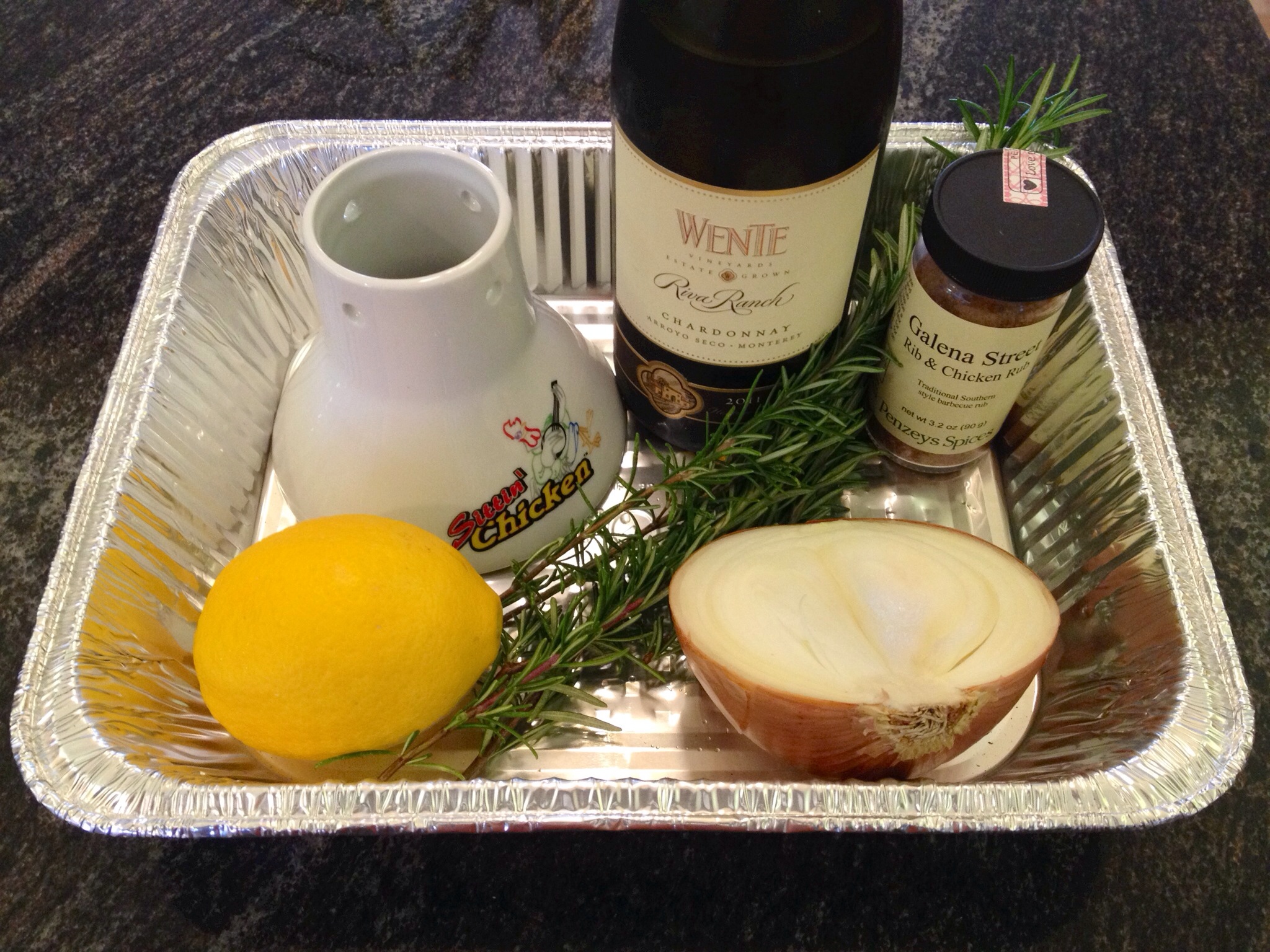
A bottle of booze and a couple things from the yard are all you really need.

A bottle of booze and a couple things from the yard are all you really need.

Truth be told, I have never tried using an actual can of beer; there are all sorts of things in and on aluminum cans that were never intended to be exposed to high temperatures. I have no intention of finding out what Schlitz logo ink tastes like, so instead I use a specially made porcelain steamer thingy called a Sittin’ Chicken. There are a number of different options that also accomplish the same thing, most notably the Poultry Pal. Choose whatever gizmo you like best and start getting your ingredients together.


Ingredients

  • a chicken!
  • white wine
  • 1/2 medium onion
  • 1/2 lemon
  • 4 or 5 fresh rosemary sprigs
  • olive oil
  • poultry seasoning


Other stuff you’ll need

  • a drip pan or disposable aluminum tray
  • a wooden skewer
  • a meat thermometer
  • a steamer to sit your chicken on (can of beer, Sittin’ Chicken, etc.)
  • someone to take incriminating pictures of you sticking things in a chicken’s butt


Directions

You can use either a barbecue or an oven to prepare this recipe. A regular old charcoal barbecue or grill is preferable, but anything capable of maintaining medium heat for a few hours will do. This recipe does best when the heat is concentrated below the chicken, so if your oven will do that sort of thing (sometimes called a “baking” setting), set it up that way. If you’re using a smoker or barbecue, you want direct heat right on the bottom of the chicken. Not tons of heat, but it should be direct as opposed to indirect. What we want to do is get the liquid in the steamer (or can) as hot as possible, preferably boiling. If you just roast or broil the chicken, the steamer will be the last thing to heat up and will only reach about 165 degrees, doing a poor job of providing flavor and steam. So, set up your oven or grill for direct, bottom-only heat and start it warming up. Aim for about 275-300 degrees F.

Cut up the lemon and the onion into rough chunks and put them in the steamer, filling it loosely about halfway. Place the rosemary sprigs in the center of the steamer, standing them up like a bouquet. Pour in the white wine, filling it almost all the way to the top. Place the whole thing in the center of your drip pan.

Please have a seat and enjoy the sauna.

Please have a seat and enjoy the sauna.

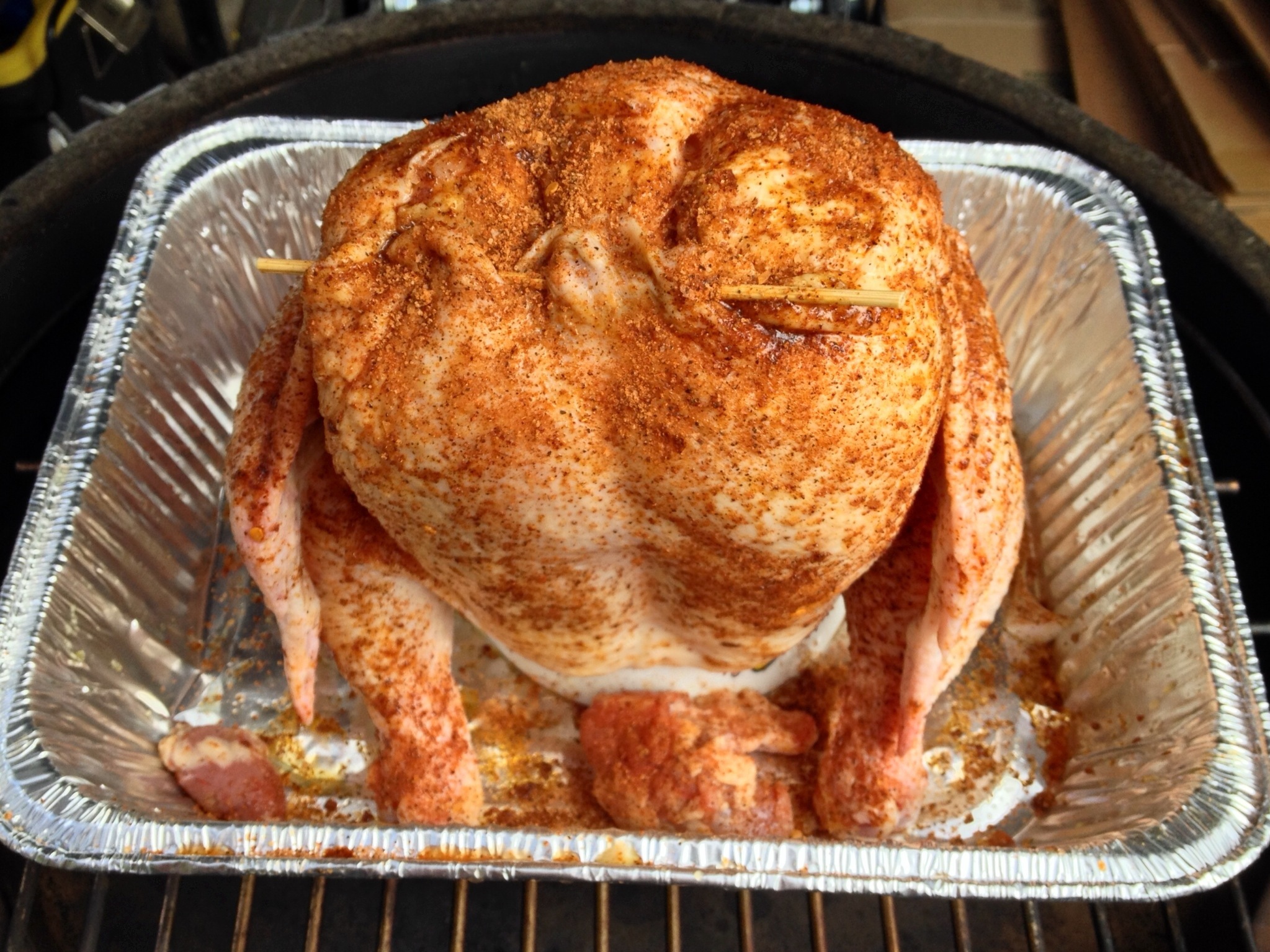
Rinse the chicken with water, inside and out. Remove the giblets and any other nasty bits you find inside and throw them away. Or, if you have carnivorous pets, throw the giblets in the drip pan instead and they will become delicious and disgusting treats for later. Sprinkle a healthy amount of your poultry seasoning (I sometimes just use thyme and oregano) inside the chicken cavity. Carefully sit the chicken on top of the steamer, making sure all the rosemary sprigs end up inside the bird. Rub the skin thoroughly with olive oil and sprinkle or rub more of your seasoning on the outside. Using the skewer, “sew” the neck of the chicken shut so that none of the steam can escape. Put your new best bird friend in your oven or barbecue and begin rubbing your hands with glee.

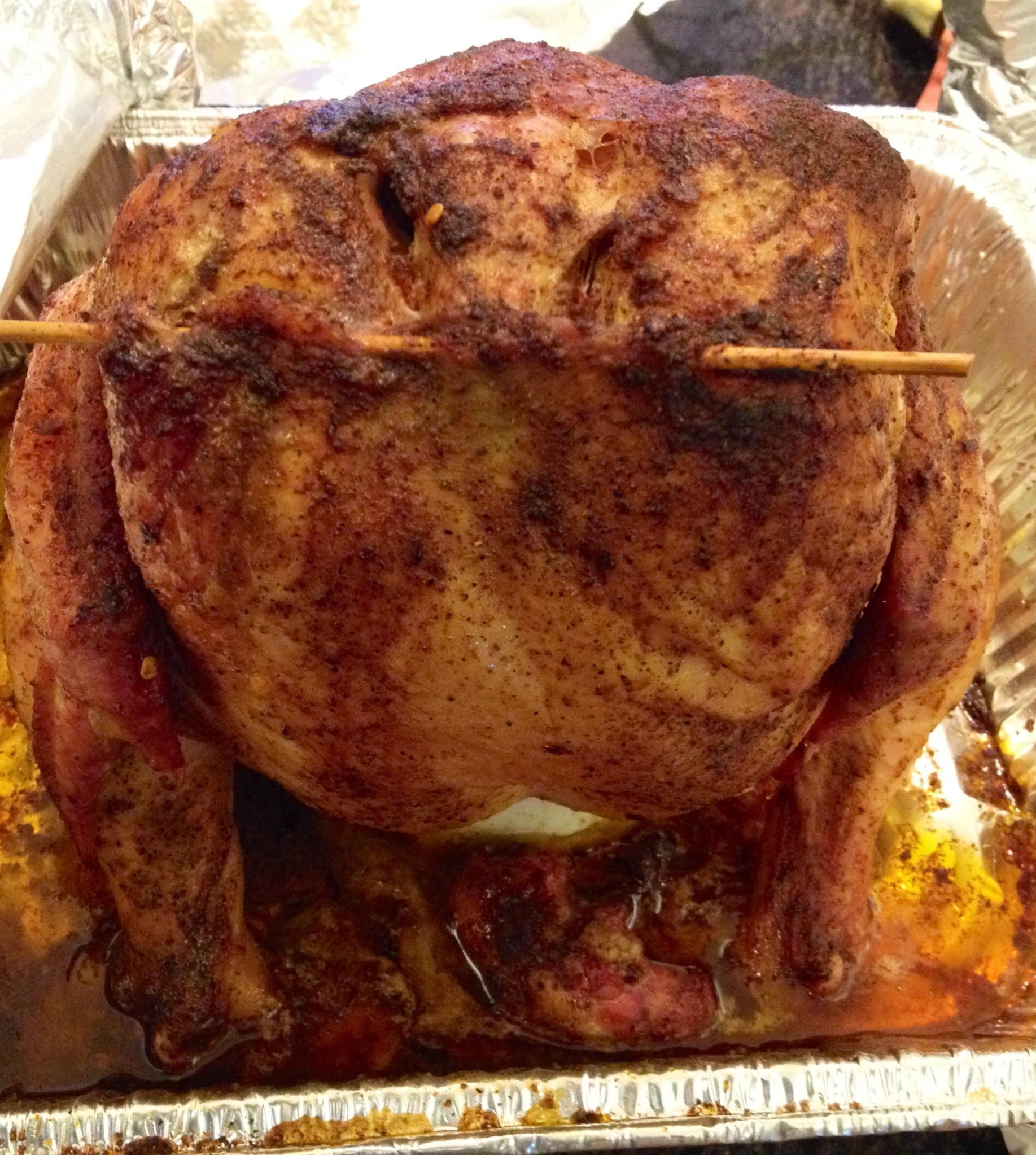
The dinner guest has arrived.

The dinner guest has arrived.

Start checking the internal temperature of the chicken after about an hour. You will want to probe multiple locations with the meat thermometer, namely the legs, back, breast, neck, and cavity. Poultry is considered done at 165 degrees F, so make absolutely sure there aren’t any spots on the bird below that temperature. I tend to go a bit above that when making this recipe, mostly because you don’t need to worry as much about the meat drying out thanks to the steamer. I prefer my chicken (especially the dark meat) falling-off-the-bone tender as opposed to barely done, but that’s just me. Once the chicken is done how you like it, remove it from wherever it’s been cooking and try not to drool on it. Depending on the size of the bird, your particular grill or oven, and the type and degree of heat, it will take from 1 to 3 hours to cook completely. It’s done when it’s done; trying to force a specific timeline on it will only lead to tears.

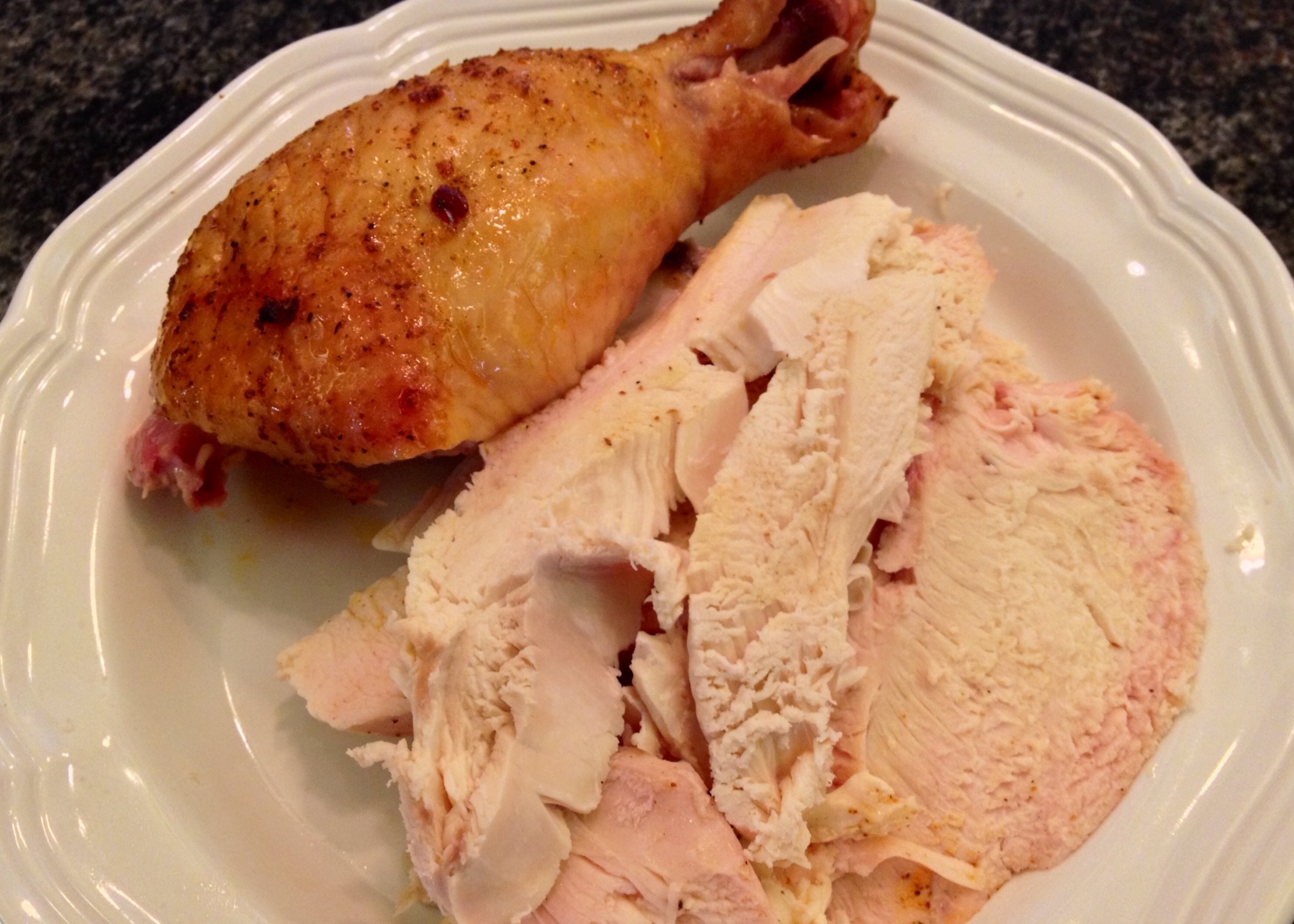
Remove the chicken from the steamer and serve sliced, quartered, pulled, or just get in there with your bare hands and devour it like a wild animal.


Now that's what I'm talking about.

Now that’s what I’m talking about.


tl;dr

Beer can chicken

Ingredients

  • a chicken!
  • white wine
  • 1/2 medium onion
  • 1/2 lemon
  • 4 or 5 fresh rosemary sprigs
  • olive oil
  • poultry seasoning


Other stuff you’ll need

  • a drip pan or disposable aluminum tray
  • a wooden skewer
  • a meat thermometer
  • a steamer to sit your chicken on (can of beer, Sittin’ Chicken, etc.)


Directions

Set up barbecue for direct heat, 275-300 degrees F. Cut lemon and onion into rough chunks and place in steamer along with rosemary sprigs. Fill steamer with white wine and place in center of drip pan. Rinse chicken with water, remove giblets, and place upright over steamer. Rub skin with olive oil and sprinkle with poultry seasoning. Use wooden skewer to sew neck hole shut. Roast chicken for 1-3 hours, until internal temperature is at least 165 degrees F. Check multiple points around chicken, including thigh joints. Remove from heat and serve immediately.


See also


Pumpkin butter cake

I like to think of this recipe as a redneck twist on pumpkin pie. In truth, it’s a holiday twist on a popular redneck recipe, but let’s not split hairs. This decadent, gooey, decidedly bad-for-you dessert has become a holiday favorite among my friends and family, and it’s well on the way to becoming a tradition. Butter cake really isn’t a cake at all, more like a dense cake-pie hybrid; not even the most stoic pumpkin pie loyalists are immune to the allure of this stuff.

Skip to the short version

“Throw the box away, directions and all. Feels good, doesn’t it?”

Having been born and (mostly) raised in California, I had never heard of butter cake before a few years ago. All desserts in California are strictly forbidden by law to have flavor or calories, and they must also include organic agave syrup, Brussels sprouts, and lima bean flour. My spouse, a proud Texan, set me straight and introduced me to butter cake, and I have been a huge fan ever since. This particular recipe is essentially the same as Paula Deen’s, but with a couple of minor tweaks.


Ingredients

Cake

  • 1 box of regular old yellow cake mix
  • 1 stick unsalted butter (8 tbsp)
  • 1 egg

Filling

  • 1 can pumpkin (15 oz)
  • 1 package cream cheese (8 oz)
  • 1 stick unsalted butter (8 tbsp)
  • 1 tsp vanilla extract
  • 3 eggs
  • 1 box (or bag) powdered sugar (16 oz)
  • 1 tsp cinnamon
  • 1 tsp nutmeg


Other stuff you’ll need

  • an electric hand mixer
  • a large mixing bowl
  • a 13×9 baking dish
  • insulin


Directions

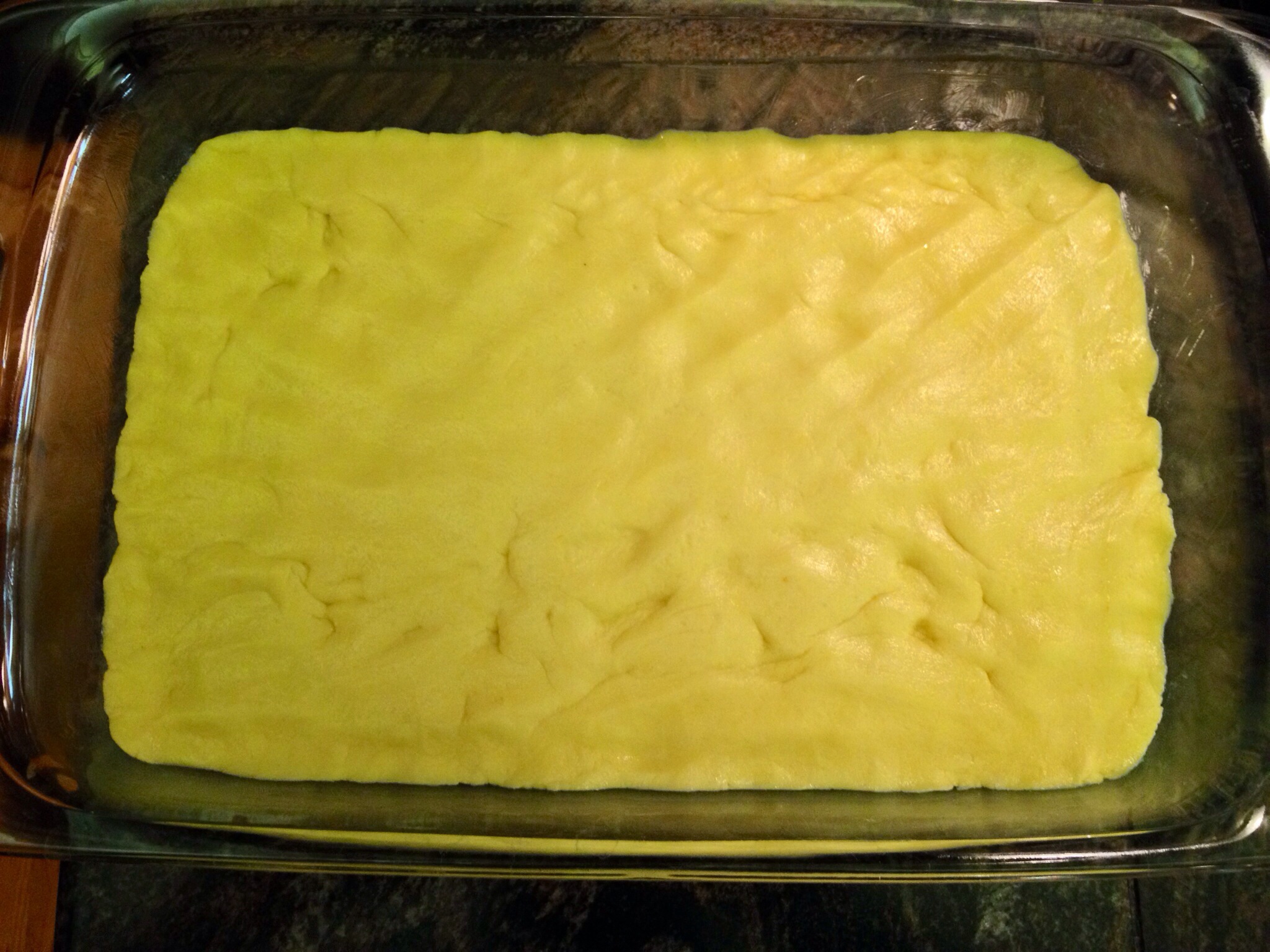
Preheat your oven to 350 degrees F. Open up the box of yellow cake mix and dump the contents into the mixing bowl. Throw the box away, directions and all. Feels good, doesn’t it? It’s fun being a kitchen rebel. Melt the stick of butter (30 seconds in the microwave will do the job), pour it into the cake mix, and give it a quick spin with the mixer. Add the egg and mix well. On a quick aside, you need to be careful anytime you are mixing any hot ingredients with raw egg. If you add one directly to the other, you run the risk of partially cooking the egg before it can get properly mixed in. Anywho, when you’re done you should end up with a bowl of thick yellow stuff the consistency of cookie dough. Lightly grease the 13×9 baking dish and press the cake mixture into the bottom in an even layer. You don’t need to be gentle – just smash the hell out of it and make sure it gets all the way into the corners.

It looks like cake batter, but it's oh so much better.

It looks like cake batter, but it’s oh so much better.

Now it’s time to start working on the filling. It’s very important to make sure the cream cheese is room temperature at this point – it won’t mix right when it’s cold. You can attempt to carefully microwave it if you so desire, but I never like how it turns out. If you’re working with refrigerator temperature cream cheese, really your best bet is to just leave it out on the counter and go do something else for 45 minutes.

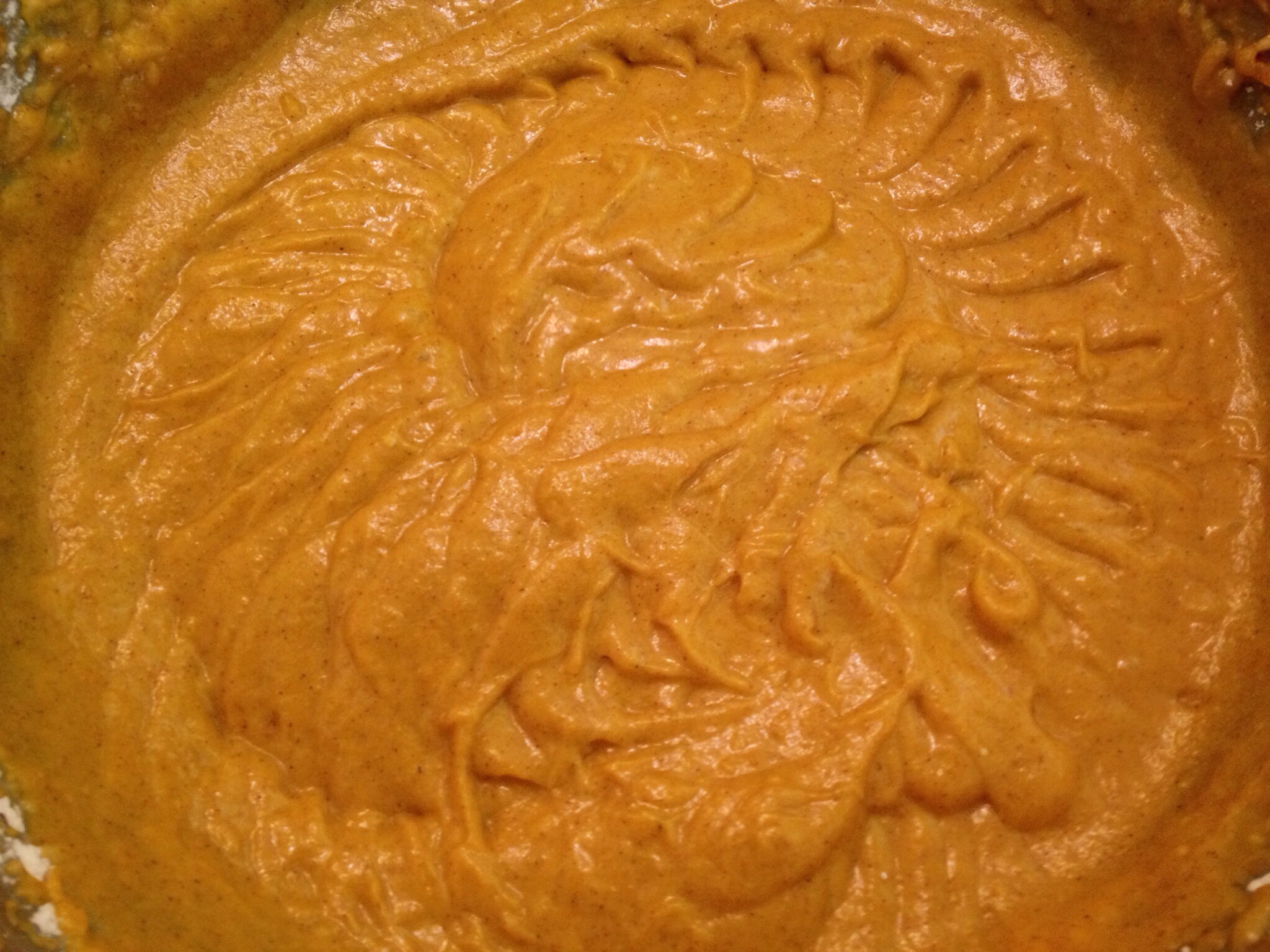
Mix the (now softened) cream cheese and the pumpkin until well blended and silky smooth. Melt the butter and add it to the mixture along with the vanilla and eggs. In a separate bowl, whisk together the powdered sugar, nutmeg, and cinnamon – feel free to double up on the cinnamon if you like. I find that nutmeg tends to clump, so make extra sure there aren’t any nuggets of the stuff lurking around in the sugar mixture. Biting into a powdery pocket of nutmeg is similar to eating underarm deodorant; avoid this if you possibly can. Slowly incorporate the dry ingredients into the wet, taking care not to fling powdered sugar into the farthest corners of your kitchen.

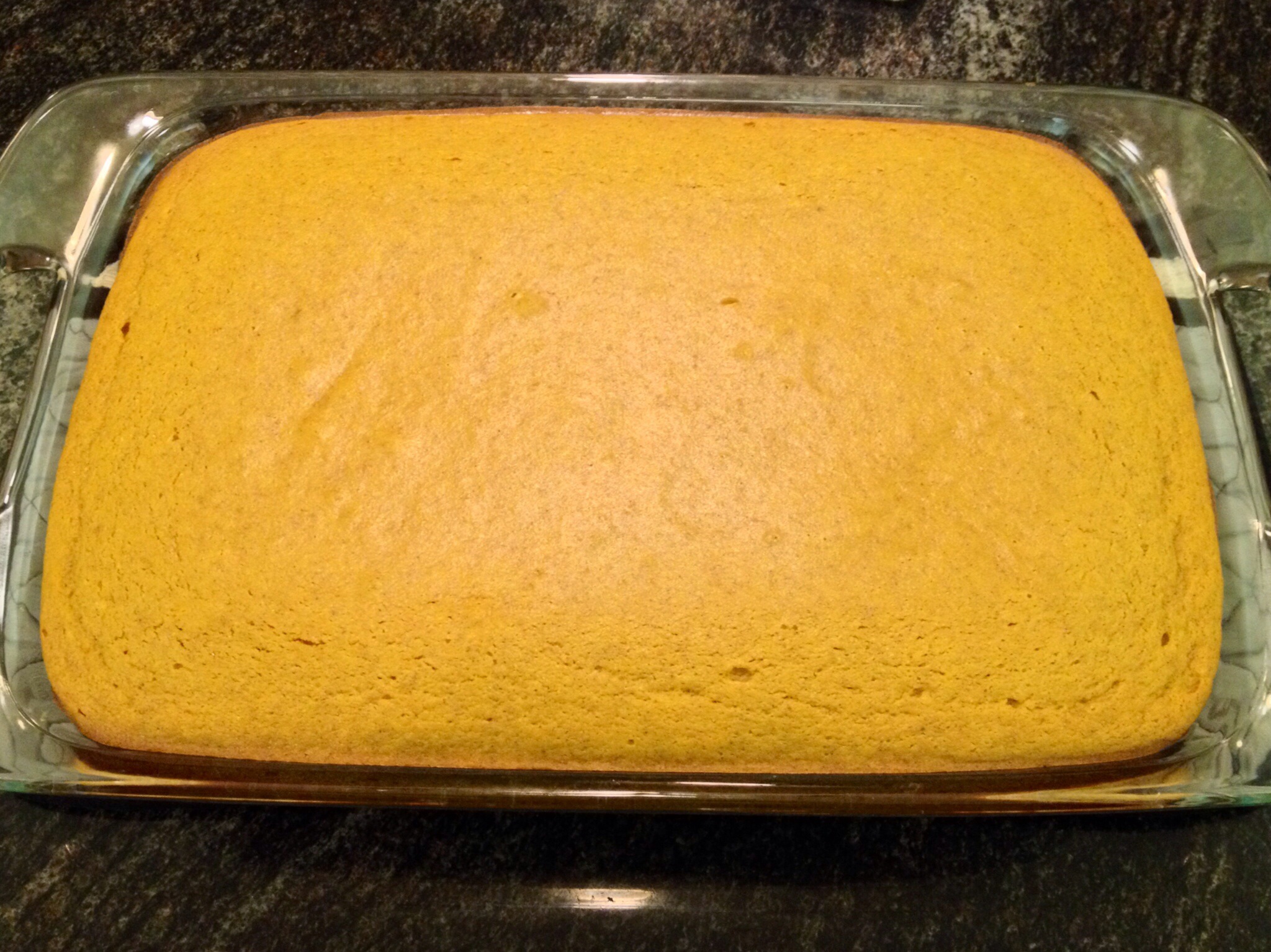
Pumpkin pie, eat your heart out.

Pumpkin pie, eat your heart out.

Pour the pumpkin mixture on top of the cake layer. Using the back of a spoon, “coax” the pumpkin mixture into the corners of the pan and make sure the whole thing is nice and level. Carefully place the pan in the oven and set the timer for 50 minutes.

When the timer goes off, take the cake out of the oven. Don’t think, just do it. The cake will appear to be very liquidy, but don’t panic. Trust me. The first time I made this I thought I had completely screwed it up, but this is how it’s supposed to be. If you are using a glass pan, you will be able to see that the cake is nice and toasty brown on the bottom – that means it’s done. Resist the urge to bake it for longer and just let it cool for a while. It will set up nicely over the next hour or so.

Nomming will happen very soon. Oh yes, very soon indeed.

Nomming will happen very soon. Oh yes, very soon indeed.

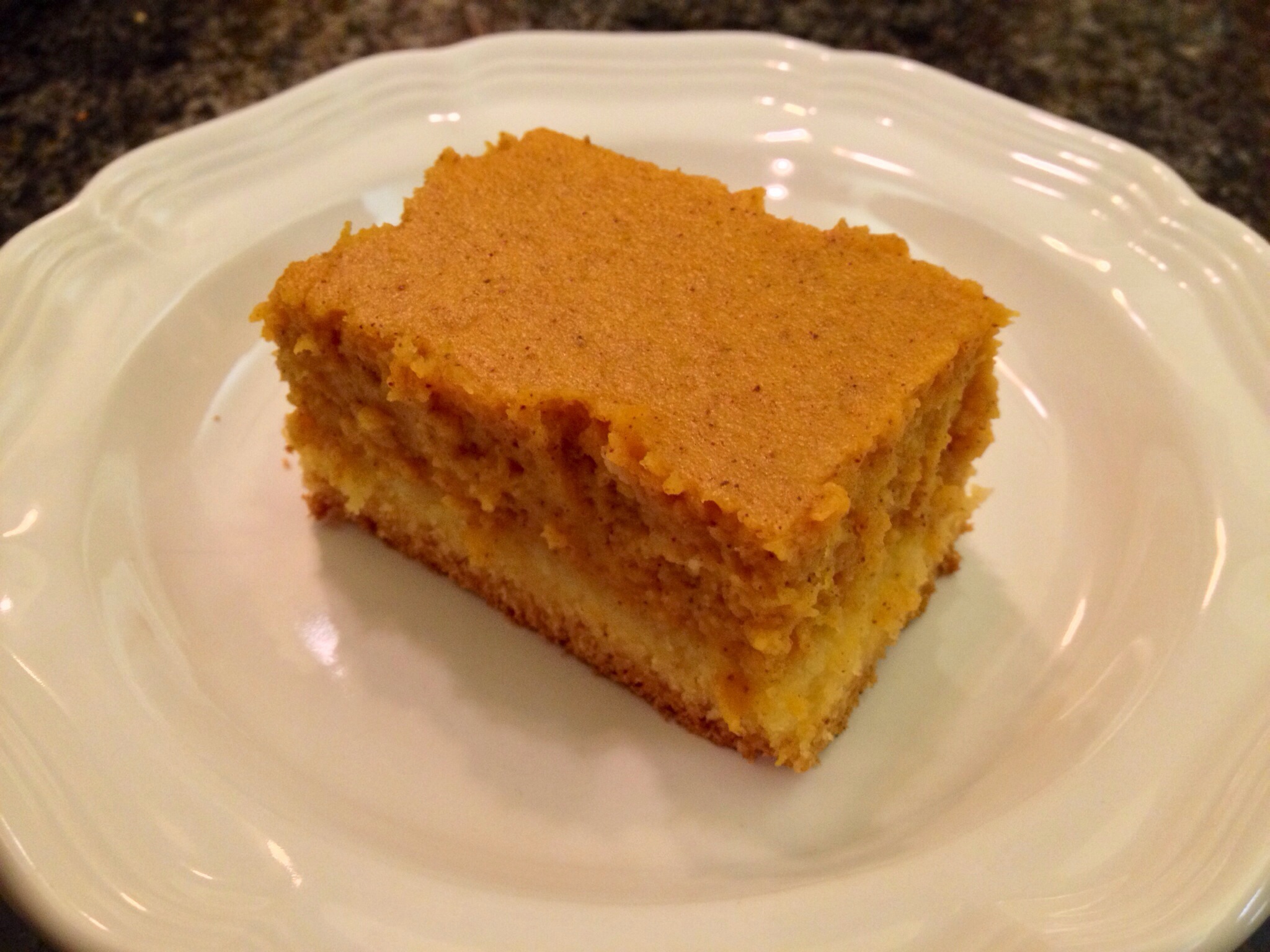
Slice it into squares, serve it with ice cream or Cool Whip or however you like it, and enjoy. You may never buy another pumpkin pie again.

I'm going to skip dinner and just have more of this.

I’m going to skip dinner and just have more of this.


tl;dr

Pumpkin butter cake

Ingredients

Cake

  • 1 box of regular old yellow cake mix
  • 1 stick unsalted butter (8 tbsp)
  • 1 egg

Filling

  • 1 can pumpkin (15 oz)
  • 1 package cream cheese (8 oz)
  • 1 stick unsalted butter (8 tbsp)
  • 1 tsp vanilla extract
  • 3 eggs
  • 1 box (or bag) powdered sugar (16 oz)
  • 1 tsp cinnamon
  • 1 tsp nutmeg


Other stuff you’ll need

  • an electric hand mixer
  • a large mixing bowl
  • a 13×9 baking dish


Directions

Preheat oven to 350 degrees F. Combine cake mix, 1 egg, and 1 stick of butter, melted. Press mixture into the bottom of lightly greased baking dish. Mix cream cheese and pumpkin until well blended. Melt remaining stick of butter and add to pumpkin mixture, along with vanilla, and 3 eggs. In a separate bowl, whisk together powdered sugar, nutmeg and cinnamon. Slowly add the dry mixture to the wet, stir until evenly blended. Pour into baking dish on top of cake mixture. Bake for 50 minutes. Center will appear runny but will solidify as cake cools. Slice and serve once completely cooled.


See also


Barbecued beef brisket

There is never a bad time for barbecue, especially at Thanksgiving. Forget the turkey, make a brisket instead! Sure, your guests might throw a bit of a fuss when they find out the traditional roast bird is off the menu, but don’t worry about it. Once the aroma of tender, smoked beef hits their upturned noses, they’ll think twice about complaining to the cook.

Skip to the short version


Top 5 reasons to serve brisket instead of turkey

  1. You like awesome things
  2. You’re a turkey sympathizer
  3. You forgot to buy a turkey
  4. You remembered to buy a turkey but forgot to thaw it
  5. You’re a rebel


To a lot of people, the term “barbecued” is the same thing as “grilled”. While the two words are sometimes interchangeable, true barbecuing (at least as far as North Americans are concerned) involves indirect heat and is essentially low temperature roasting. If you were to grill a brisket directly over an open flame, you would end up with something slightly less appealing than boiled shoe leather. If, on the other hand, you decide to barbecue that same brisket, low and slow and with much loving care, you will be rewarded with some of the juiciest and most flavorful beef you’ve ever experienced.

” Apply more cocktails to your liver while you wait “

Now that we have the silly definitions out of the way, you’ll need something to barbecue your brisket in. There are a number of different options here, some of which work better than others. A purpose-built smoker like a Big Green Egg or drum-style barbecue is ideal. Standard Weber-style charcoal barbecues can be made to work, as can propane grills. Whatever setup you’re using, you will need it to maintain a steady temperature in the low 200 degree range for about ten hours.

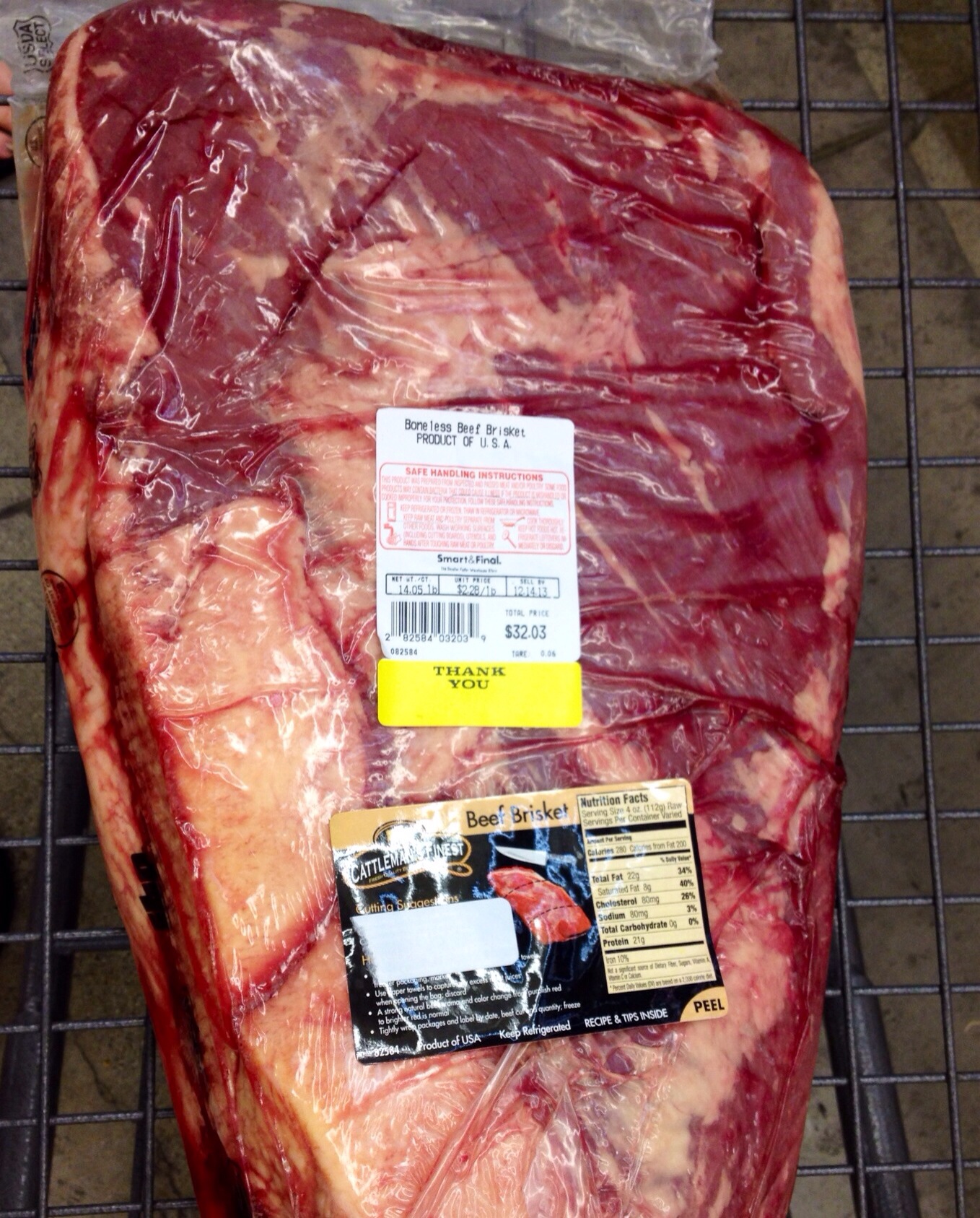
Of all places, Smart & Final stocks whole briskets regularly. They're cheap as heck too.

Of all places, Smart & Final stocks whole briskets regularly. They’re cheap as heck too.

The last time I made a brisket – the one pictured here – I followed Chris Lilly’s recipe. His process involves a wet rub followed by a dry rub, and it’s remarkably delicious. Because I don’t want to Chris to sue my eyebrows off, I’m not going to repeat the recipe here. If you want to know what it is, you’ll have to buy a copy of Big Bob Gibson’s BBQ Book and read it for yourself. What I will say is that I like Grill Mates Texas BBQ Rub as well as anything, so if in doubt just go with that.


Ingredients

  • A humongous whole brisket, between 10 and 15 lbs
  • some kind of dry rub


Other stuff you’ll need

  • wood chips for additional smoke flavor (e.g., hickory, apple wood, etc.)
  • aluminum foil
  • a large drip pan or disposable aluminum foil tray
  • a meat thermometer
  • freezer paper
  • cocktails


Get your barbecue/smoker/whatever going at 225 degrees F, set up for indirect heat. Wash off the giant hunk of dinosaur meat with water and pat dry with paper towels. Apply the dry rub liberally to both sides, and then haul it outside to your eagerly awaiting pit of fire. Place the brisket on the barbecue fat side up and away from any direct flames, close the lid, and leave it alone for a while. (This is where the cocktails come in.)

Moo

Moo

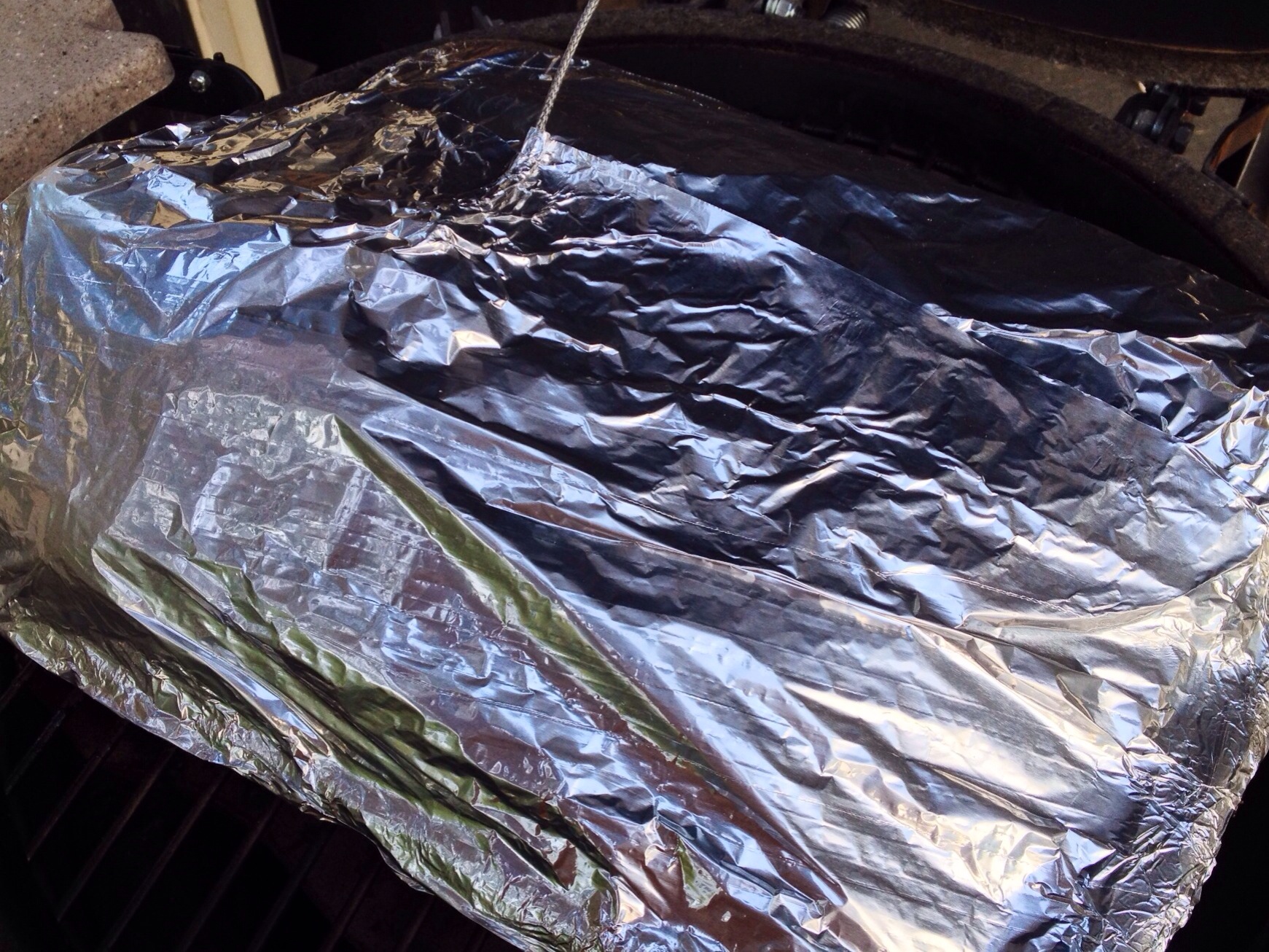
Every hour or so, check your barbecue to make sure it’s holding the correct temperature and add a few wood chips to increase the smoke flavor. At around the six hour mark, start checking the internal meat temperature as well. Once the meat hits about 165 degrees F, remove it from the grill and place it in a roasting or drip pan. Pour a cup of water into the pan and cover tightly with aluminum foil. Place the whole thing back in the barbecue for another two-ish hours. Cocktail time.

This step only requires 527 square feet of foil.

This step only requires 527 square feet of foil.

Once the internal temperature of the meat hits 185 degrees F, remove it from the barbecue (but leave it covered!) and allow it to rest at room temperature for an hour. Don’t worry, it will stay very hot on its own for quite a long time. Apply more cocktails to your liver while you wait.

When the hour is up, you’re ready to carve. Clear a large area on your kitchen counter and lay out a few large sheets of freezer paper, plastic side down. Uncover the brisket, carefully remove it from the pan, and be prepared to have every single living creature in your house begin crowding you, begging for samples. Threaten them with your carving knife to help clear some elbow room. Trim away the fat cap, separate the point from the flat, and slice against the grain. If none of that made any sense to you at all, here’s a helpful video that should clear things up.

The big reveal. Save those pan drippings!

The big reveal. Save those pan drippings!

At this point you will probably have noticed that there are quite a lot of drippings sloshing around in the empty pan. Skim the fat off the top (I recommend using a fat separator) and set the fat-less juice aside. This heavenly beef juice can be used as a drizzle on top of servings of sliced brisket, and it also does a great job of preventing any leftover meat from drying out in the fridge or freezer.

Enjoy the meat coma, and happy Thanksgiving!

Gobble gobble? Indeed.

Gobble gobble? Indeed.


tl;dr

Barbecued beef brisket

Ingredients

  • A whole beef brisket, between 10 and 15 lbs
  • some kind of dry rub


Other stuff you’ll need

  • wood chips for additional smoke flavor (e.g., hickory, apple wood, etc.)
  • aluminum foil
  • a large drip pan or disposable aluminum foil tray
  • a meat thermometer
  • freezer paper


Directions

Set up barbecue/smoker for indirect heat, preheat to 225 degrees F. Rinse brisket with cold water, pat dry with paper towels, and apply dry rub liberally. Place brisket on grill fat side up and cook for at least 6 hours, adding wood chips every hour for additional smoke flavor. When internal temperature reaches 165 degrees F, remove brisket from grill and place into roasting pan along with one cup of water. Cover tightly with foil and return brisket to grill. Cook for another 2 hours or until internal temperature reaches 185 degrees F. Remove from grill and allow to rest for 1 to 2 hours, leave covered in foil. Uncover and retain pan drippings. Carve brisket and serve.


See also